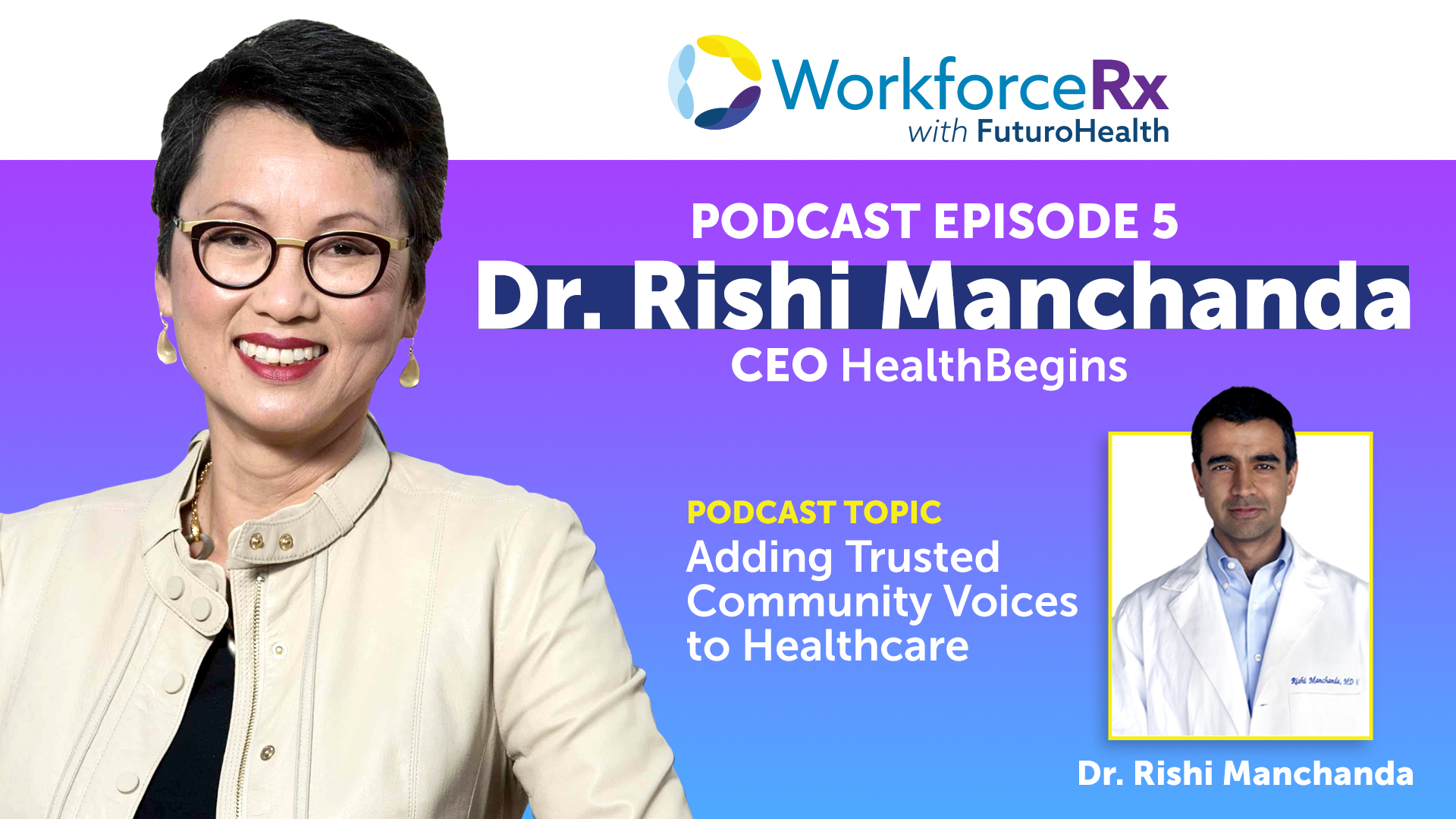
You can’t have an effective response to public health challenges without putting racial and social equity at the center of your approach, and one key way to do that is supplementing the healthcare workforce with “trusted voices” from underserved communities. That’s the view of Dr. Rishi Manchanda, a public health veteran and healthcare leader whose career has focused on developing new strategies to improve health in resource-poor communities. Through a mix of frontline and leadership positions, he’s helped provide care for homeless veterans, immigrant workers in rural areas, and communities in South Central Los Angeles. As an author and CEO of HealthBegins, he’s become a leading national voice on shifting the focus of our healthcare system to “upstream” causes of poor health status – such as access to quality food and housing — and creating equitable access to care. Check out this illuminating conversation with Futuro Health CEO Van Ton-Quinlivan to learn about “upstreamists”, the workforce-equity connection, and what COVID is teaching us about our healthcare system.
Among the knotty issues that dementia forces on family caregivers is when to know if their loved one with the disorder is in need...
“Community colleges play this really unique role because we balance this idea of a general education with integrating skills that get you ready for...
Our exploration of solutions for growing and strengthening the direct care workforce continues on this episode of WorkforceRx with a close look at a...