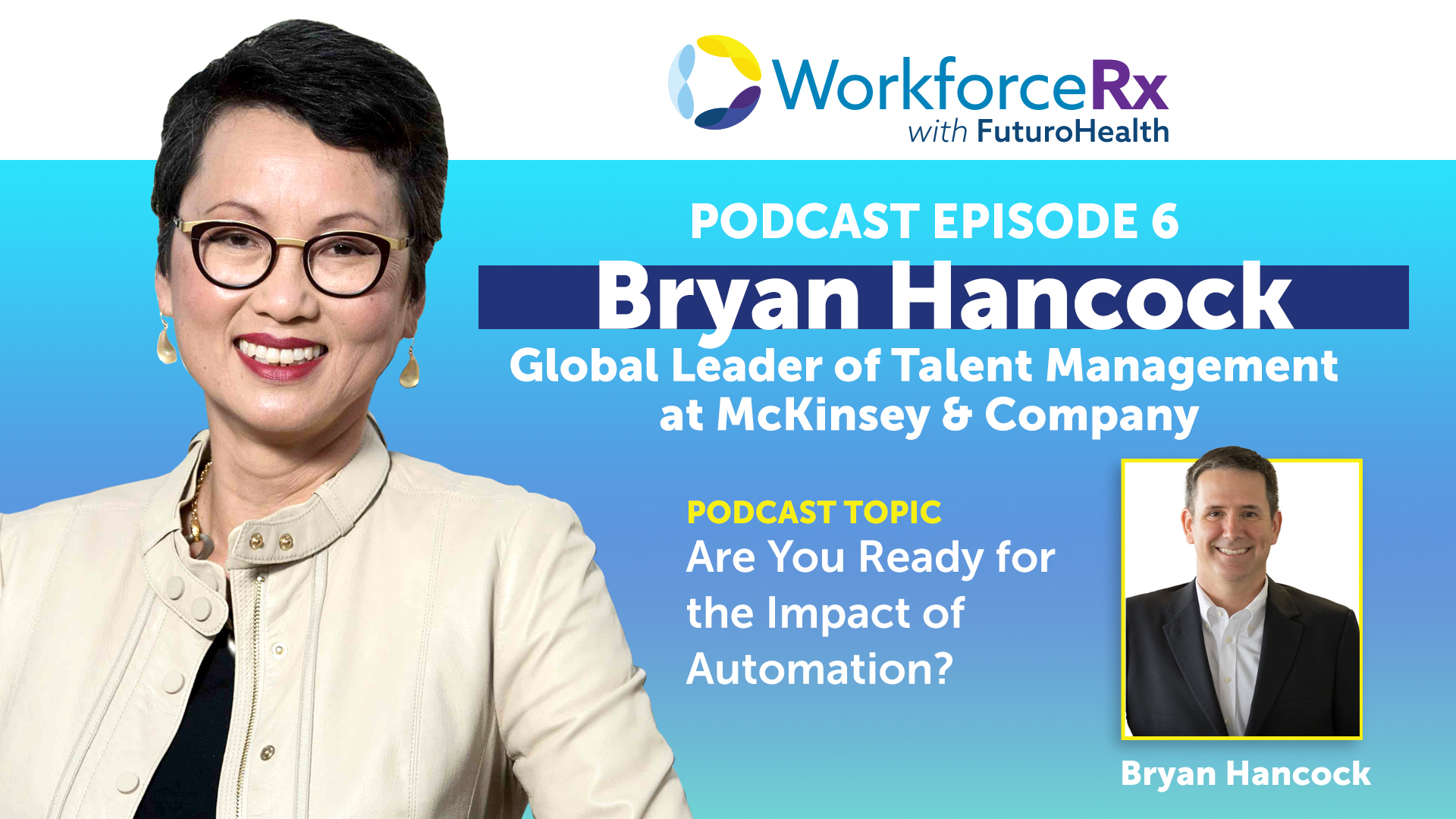
Bryan Hancock has spent the last two decades focused on the disconnect between the skilled workers employers need and what is available in the workforce. As Global Leader of McKinsey & Company’s Talent Management Practice, he’s able to tap into the firm’s deep research on workforce trends to advise private and public sector clients and what he’s seeing is an even larger skills gap developing as automation and digitization take over a significant portion of what he calls “the dull and dangerous” work. In fact, McKinsey estimates 30 to 40 percent of all workers in developed countries may need to move into new occupations or at least upgrade their skill sets significantly in the next decade. Despite that daunting challenge, he’s not discouraged because many large employers are making big investments in employee learning opportunities, and technologies like virtual reality are creating fun and effective options for training. He’s also encouraged by growth in the “workforce ecosystem” – independent foundations, companies, and other organizations who are innovating to close gaps in skills and opportunity. Check out this episode of Workforce Rx as Bryan and Futuro Health CEO Van Ton-Quinlivan explore all of those issues plus the growing importance of soft skills, the impact of the gig economy, and how employers can take a “talent first” approach.
Studies show that when it comes to getting people interested in any career, early exposure can make a significant impact on their ultimate choice....
There are many stakeholders in the ongoing effort to combat healthcare workforce shortages but one of the most important is state governments because of...
If you want proof of how the pandemic has taken a toll on the healthcare workforce, look no further than a recent national poll...